



The United States has warned that Iran’s refusal to discuss its ballistic missile program represents a serious barrier to progress as a new round of nuclear negotiations begins in Geneva, underscoring rising tensions amid a significant U.S. military buildup in the Middle East.
The talks, which mark the third round of discussions between Washington and Tehran in recent weeks, come as President Donald Trump has renewed warnings that Iran will face consequences if it does not agree to a new nuclear framework.
U.S. officials say diplomacy remains the preferred path, but stress that unresolved weapons concerns continue to pose a growing security risk.
Missile Program Emerges as Key Sticking Point
Ahead of the talks, U.S. Secretary of State Marco Rubio said Iran’s unwillingness to address its intercontinental ballistic missile development is a “big, big problem” that cannot be ignored.
Rubio told reporters that while Thursday’s discussions are expected to focus primarily on Iran’s nuclear activities, Tehran has consistently refused to engage on missile capabilities, which U.S. officials view as an inseparable part of the broader security equation.
“These systems are designed for one purpose,” Rubio said, referring to Iran’s conventional weapons programs. “They are intended to threaten American forces and American interests. That reality has to be addressed.”
U.S. officials argue that limiting nuclear enrichment without addressing delivery systems would leave major security gaps, particularly as missile range and precision continue to improve.
U.S. Military Posture Signals Pressure
The negotiations take place against the backdrop of an expanded U.S. military presence across the Middle East. Additional naval assets, aircraft, and personnel have been deployed in recent weeks, a move officials describe as defensive but clearly designed to reinforce deterrence.
President Trump warned last week that “really bad things” could happen if Iran refuses to reach an agreement, signaling that military options remain on the table should talks collapse.
In his State of the Union address, Trump also claimed that Iran is developing rockets that could eventually reach the U.S. mainland, though he did not provide supporting evidence.
When pressed on the timeline for such capabilities, Rubio said Iran is “clearly headed in that direction,” describing the threat as “unsustainable.”
Geneva Talks Led by Senior Envoys
The latest negotiations are being held in Geneva, with Oman once again acting as mediator. The U.S. delegation is led by Middle East envoy Steve Witkoff and Jared Kushner, while Iran’s team is headed by Foreign Minister Abbas Araghchi.
According to officials familiar with the talks, discussions are taking place at the residence of Oman’s ambassador to the United Nations. The format is expected to include indirect exchanges as well as working-level drafting sessions aimed at narrowing differences.
Washington continues to press Iran to halt uranium enrichment tied to weapons development, while Tehran maintains that its nuclear activities are strictly for peaceful energy use.
Iran Signals Flexibility but Draws Red Lines
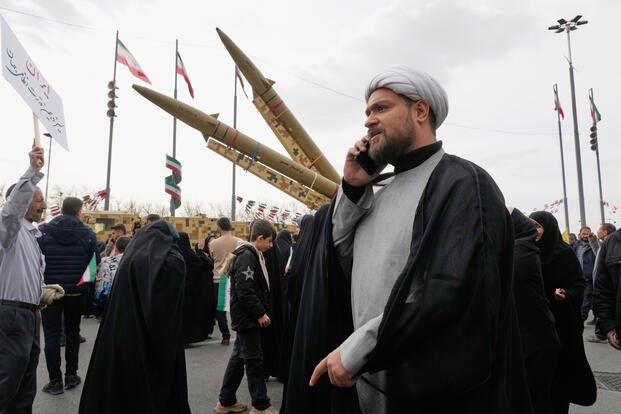
Iranian officials have sought to project cautious optimism ahead of the talks. Araghchi said Wednesday that a “fair, balanced, and equitable deal” remains achievable, adding that Iran is prepared to make reasonable compromises to address U.S. concerns.
However, Tehran has repeatedly stated that its missile program is non-negotiable. Iranian officials argue that missile capabilities are a core component of national defense and fall outside the scope of nuclear negotiations.
Iranian Foreign Ministry spokesman Esmail Baghaei echoed that stance, saying Iran has entered talks with “a reasonable amount of flexibility” while insisting on its right to peaceful nuclear energy under international law.
Domestic Pressure Builds Inside Iran
Beyond international negotiations, Iran faces mounting internal challenges. Ongoing economic hardship, compounded by sanctions, has fueled widespread protests across the country.
Student-led demonstrations continued this week at universities, reflecting growing frustration with inflation, unemployment, and government restrictions.
Analysts note that Tehran’s desire for sanctions relief may increase pressure on Iranian negotiators to show progress, even as hardline positions limit room for maneuver.
Analysts Temper Expectations for Breakthrough
Despite heightened rhetoric and military signaling, experts caution against expecting a rapid breakthrough. Paul Musgrave, an associate professor at Georgetown University in Qatar, said both sides are likely to reaffirm long-standing positions rather than resolve core disputes in the short term.
Musgrave noted that Iran’s priorities remain regime security, maintaining missile capabilities, and preserving the legal option to pursue nuclear weapons if it chooses.
On the U.S. side, objectives range from nonproliferation to human rights concerns, creating mixed signals that complicate negotiations.
“I don’t expect any major breakthrough in the next 24 hours,” Musgrave said, adding that immediate U.S. military action also appears unlikely for now.
What Comes Next
As talks resume in Geneva, the gap between U.S. and Iranian positions remains wide, particularly on ballistic missiles. While both sides continue to express interest in diplomacy, unresolved weapons concerns and regional instability raise the stakes surrounding the negotiations.
For now, officials say discussions will continue under close scrutiny, with the coming days likely to shape whether diplomacy gains momentum or gives way to heightened confrontation in an already volatile region.
The post U.S. Warns Iran Missile Stance Is a “Major Obstacle” as Nuclear Talks Resume in Geneva appeared first on .
Continue reading...