


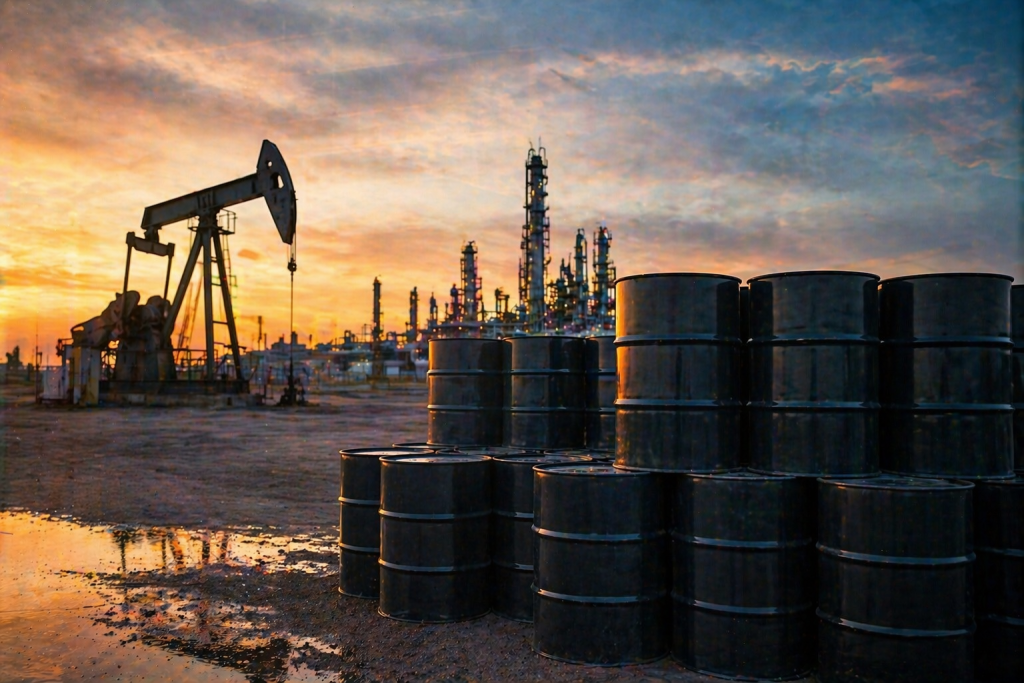
Brent crude oil and West Texas Intermediate surged sharply as renewed tensions in the Iran conflict rattled global markets, reminding investors that volatility remains far from over.
Brent climbed more than 6% to around $107.8 per barrel, while WTI briefly spiked to $113 before settling slightly lower. The sharp move came after conflicting signals from political leaders reignited concerns that the war could intensify rather than wind down.
Mixed Signals Fuel Market Uncertainty
Markets were initially buoyed earlier in the week by optimism that the conflict might soon ease. That sentiment quickly reversed after fresh remarks from Donald Trump suggested both a possible end to the war and a willingness to escalate military action in the near term.
Iranian officials responded with threats of stronger retaliation, adding to the uncertainty. The lack of clarity around timelines or conditions for de-escalation has made it difficult for traders to price in a stable outlook.
Analysts say this kind of mixed messaging is particularly disruptive for energy markets. Oil prices are highly sensitive to geopolitical risk, especially when supply routes are at stake.
Strait of Hormuz Remains the Key Risk
At the center of the turmoil is the Strait of Hormuz, a critical shipping route that typically handles about 20% of global oil flows.
Although the United States imports relatively little oil through the strait, global pricing means American consumers and businesses still feel the impact. Oil is traded on an international market, so disruptions anywhere can push prices higher everywhere.
Even if the conflict were to end soon, restoring normal shipping operations will not happen overnight. Experts estimate it could take weeks for flows to return to pre-war levels, depending on security conditions and insurance coverage for tankers.
Futures Market Signals Tight Supply
Oil futures markets are reflecting growing concern about near-term supply shortages. Contracts for immediate delivery are trading at a premium compared to those for later months, a sign that traders expect tighter supply in the short term.
This pricing structure, known as backwardation, often appears during periods of supply disruption. It suggests that refiners and buyers are willing to pay more now to secure oil quickly rather than risk future shortages.
According to market analysts, the current trend is being amplified by fears that escalation could further restrict supply, especially if infrastructure or shipping lanes face additional attacks.
Global Markets React to Oil Spike
The surge in oil prices has already begun to ripple across financial markets. Stock indexes in Asia, Europe, and the United States declined as investors reassessed the economic impact of prolonged high energy costs.
Higher oil prices tend to increase inflation, raise transportation costs, and squeeze consumer spending. These factors can weigh heavily on economic growth, especially in regions more dependent on imported energy.
Asian and European economies are particularly vulnerable due to their reliance on Middle Eastern oil flows. Even in the US, where domestic production is strong, global pricing dynamics still drive fuel costs higher.
Economic Impact Could Extend Beyond Energy
The implications of rising oil prices go beyond fuel costs. Higher energy prices can push up the cost of goods and services across the economy, affecting everything from manufacturing to food distribution.
Businesses may face increased operating expenses, while consumers could see higher prices at the pump and in stores. This combination creates a challenging environment for both economic growth and monetary policy.
Central banks, including the Federal Reserve, are closely watching these developments. Persistent energy-driven inflation could complicate decisions on interest rates, especially if growth begins to slow.
A Volatile Path Ahead
For now, oil markets remain highly sensitive to every new development in the conflict. Traders are balancing hopes for a resolution against the risk of further escalation.
Even small changes in the geopolitical landscape can trigger large price swings, as seen in recent days. Until there is clear progress toward stability, volatility is likely to remain a defining feature of the energy market.
Investors, policymakers, and businesses alike are watching closely, knowing that the direction of oil prices will play a major role in shaping the global economic outlook in the months ahead.
The post Oil Prices Jump as Iran War Escalation Fears Return appeared first on .
Continue reading...