


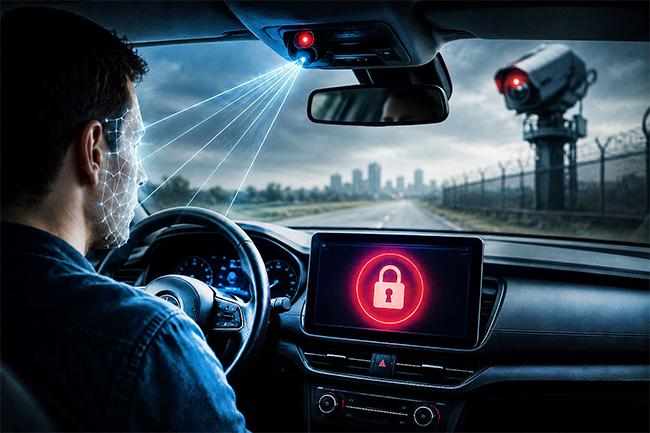
Starting in 2027, all new vehicles were supposed to include monitoring systems designed to determine whether a driver is fit to drive. It seems the technology isn’t ready yet, but it will be at some point.
Once in full effect, impairment won’t be judged by a police officer or another human, but instead by an algorithm using cameras and behavioral-tracking technology. The system will be capable of disabling cars if it doesn’t like what it detects.
To some, this might sound like a great idea since it was designed to stop drunk driving. But others see it as a surveillance system where cameras watch your face, sensors track your eyes, and behavior is analyzed.
The foundation for it was placed in Biden’s 2021 Infrastructure Investment and Jobs Act. Buried inside Section 24220 is a mandate requiring “advanced impaired-driving technology” in every new car sold in America. Harmless wording on the surface, of course, because calling it a government-mandated driver monitoring system capable of disabling your vehicle might have sparked public outrage.
Representative Thomas Massie has been one of the few people fighting to amend this legislation by supporting the No Kill Switches in Cars Act. In 2025, he questioned how the technology could be mandated before it even exists, and warned that the final product could easily generate false positives during emergencies or stressful situations. He told Congress that if the technology is enforced, car dashboards would become the “judge, jury, and executioner.”
Similar technology is in the works as we speak. Ford has filed a patent for a system that would capture biometric traits, such as fingerprints and facial features, and run them through a criminal database to detect persons of interest.
Imagine jumping in your car to head to the grocery store, and you’re scanned for criminal activity.
What’s next? Geofencing, where your vehicle won’t let you go to your intended destination.
People don’t want government-mandated control over their vehicles; it’s an invasion of privacy and a violation of their constitutional rights. But more importantly, there’s a bigger picture going on here, because this isn’t really about cars. It’s about building a surveillance state where, eventually, compliance will be enforced by limiting freedoms.
The post Your Car, Their Rules appeared first on Redacted.
Continue reading...