


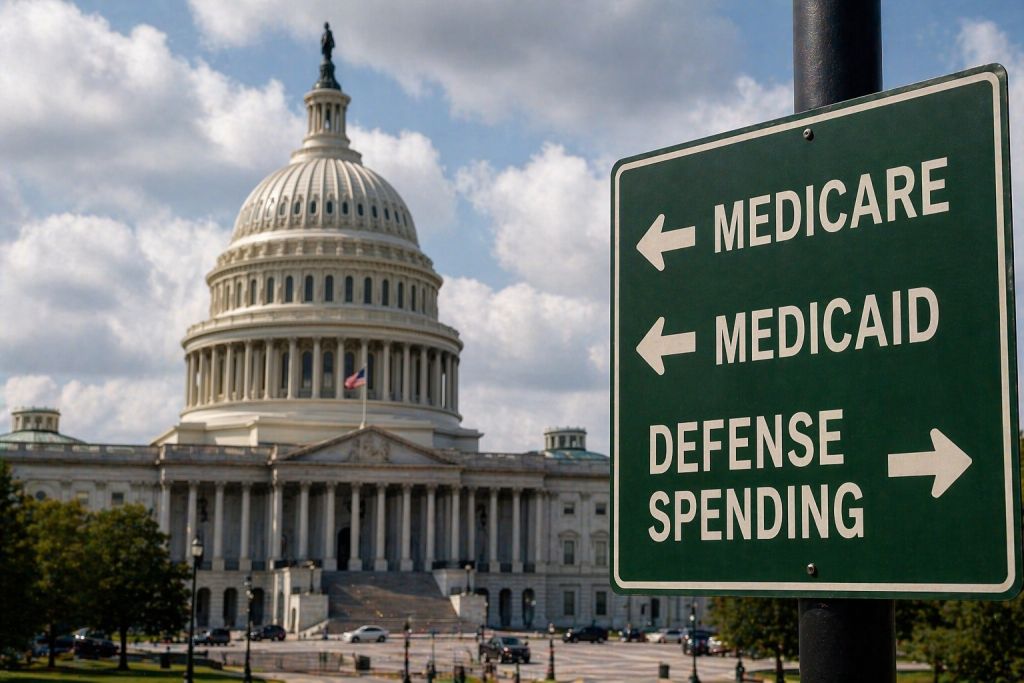
Donald Trump has sparked fresh debate over government spending priorities, warning that rising military costs could make it harder for Washington to fund major programs like Medicare and Medicaid.
Speaking at a recent White House event, Trump suggested that the growing cost of war is forcing difficult tradeoffs. His comments come as policymakers weigh increased defense spending alongside ongoing fiscal pressures.
According to the report, the administration is considering significant budget allocations to support military operations, potentially putting pressure on social programs that millions of Americans rely on.
A Shift in Spending Priorities
Trump framed healthcare and childcare programs as responsibilities that could shift more toward state governments. His remarks suggest a broader policy direction where federal spending becomes more concentrated on defense and national security.
This shift could have far-reaching implications. Programs like Medicaid and Medicare are among the largest components of federal spending, supporting healthcare access for seniors and low-income individuals.
Reducing federal involvement or funding could place additional pressure on states, many of which already face tight budgets and competing priorities.
Rising Defense Costs Add Pressure
The backdrop to this discussion is a sharp increase in military spending tied to ongoing geopolitical tensions. Defense officials are reportedly seeking substantial additional funding to support operations abroad.
War-related expenses can escalate quickly, especially when conflicts extend over months or years. These costs often include not just military operations, but also logistics, equipment, and long-term commitments.
As defense budgets expand, lawmakers may face difficult decisions about how to balance spending across different areas of government.
Political Pushback Intensifies
Critics have pushed back strongly against the idea of cutting or limiting healthcare funding. Elizabeth Warren argued that resources could be redirected toward domestic programs instead of overseas conflicts.
Other lawmakers have also warned that reducing funding for healthcare programs could leave millions without coverage. Concerns are growing that such changes would disproportionately affect vulnerable populations.
The debate highlights a fundamental question in fiscal policy: how to allocate limited resources in a way that balances national security with domestic needs.
What It Could Mean for Households
For everyday Americans, the potential impact goes beyond politics. Changes to federal funding could translate into higher out-of-pocket costs for healthcare, childcare, and other essential services.
Families that rely on Medicaid or similar programs may face reduced coverage or increased expenses. At the same time, broader economic pressures such as inflation and rising energy costs are already straining household budgets.
If federal support declines, households may need to take on a larger share of these costs, making financial planning more important than ever.
Preparing for Financial Uncertainty
Experts suggest that individuals and families should take proactive steps to manage potential financial risks. Building an emergency fund can provide a buffer against unexpected expenses.
Exploring savings options and insurance coverage may also help protect against rising costs. As policy discussions continue, staying informed about potential changes can help households make better financial decisions.
Long-term planning is especially important for those approaching retirement, as healthcare expenses tend to increase with age.
A Broader Economic Debate
The discussion around war spending and social programs reflects a larger conversation about the future of the US economy. Balancing fiscal responsibility with economic growth remains a key challenge for policymakers.
While no immediate changes have been finalized, the direction of the debate suggests that government priorities may continue to evolve in response to global events.
For now, uncertainty remains high. The outcome of these discussions will likely shape both public policy and household finances in the years ahead.
The post Trump Says War Spending Threatens Medicare and Medicaid appeared first on .
Continue reading...