


Tuesday morning, in a CNBC interview, Trump said if the Iranians didn’t sign a deal, he would resume bombing.
By later that day, when a deal didn’t materialize, the White House shifted the tone.
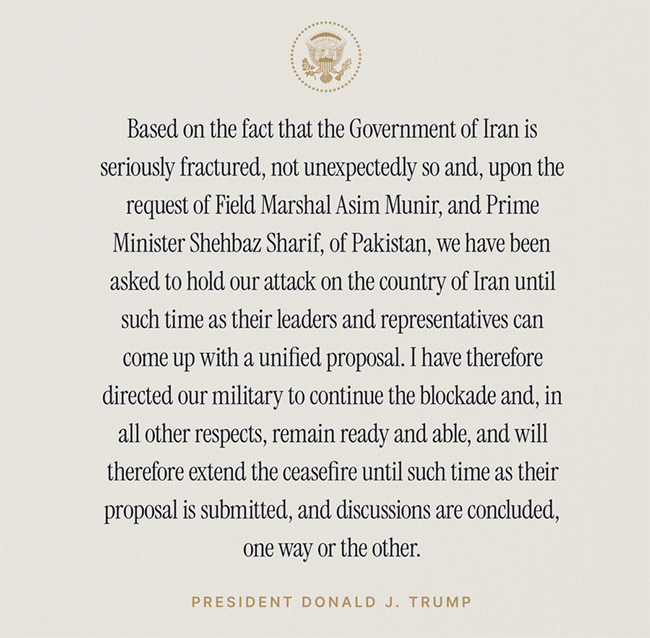
Trump is backing off and putting the source of the problem on the Iranians, who did not show up to the negotiations. He’s saying Iran is in shambles, so he is mercifully giving them time.
The president is extending the ceasefire, but says the U.S. Navy’s blockade of Iran’s ports will stay in place, which Iran says violates the agreement. He later explained that Washington would not lift the blockade because “if we do that, there can never be a Deal with Iran, unless we blow up the rest of their Country, their leaders included!”
Not exactly how ceasefires are supposed to work.
Trump’s messaging is all rhetoric anyway, so he can spin his way out of the bombing yet again.
This seems to have been the only card he could play, though, since Iran was never planning on showing up. Iranian officials had already said there are no plans for a second round of negotiations with the U.S., and accused Trump of trying to turn talks “into a table of surrender or to justify renewed warmongering.”
Vice President Vance was set to head to Islamabad on Tuesday, but that trip is now on hold with no talks to attend.
Sounds like bad planning all around — and once again, Trump’s bluff has been called.
Meanwhile, with no clear plan and constant mixed messaging from the U.S., the conflict shows no clear end in sight and is driving what IEA chief Fatih Birol called “the biggest” energy crisis in history.
The post Strategic Backtrack appeared first on Redacted.
Continue reading...